Paintastic Valley
Fabi Ayyi Ala I Rabbikuma Tukazziban Calligraphy Art
Fabi Ayyi Ala I Rabbikuma Tukazziban Calligraphy Art
Couldn't load pickup availability
Fabi Ayyi Ala I Rabbikuma Tukazziban Calligraphy: Art Inspired by Gratitude
Some words deserve more than a passing glance. They invite us to pause, reconsider what we take for granted, and recognise the blessings woven into ordinary life. Fabi ayyi ala i rabbikuma tukazziban calligraphy brings one such Qur’anic reminder into an artistic form that can be appreciated through both its message and its composition.
The inscription belongs to Surah Ar-Rahman. Its familiar question asks us to reflect on the favours of our Lord, giving the artwork a significance beyond its decorative appearance. For someone who connects with this message, choosing the painting becomes a personal decision.
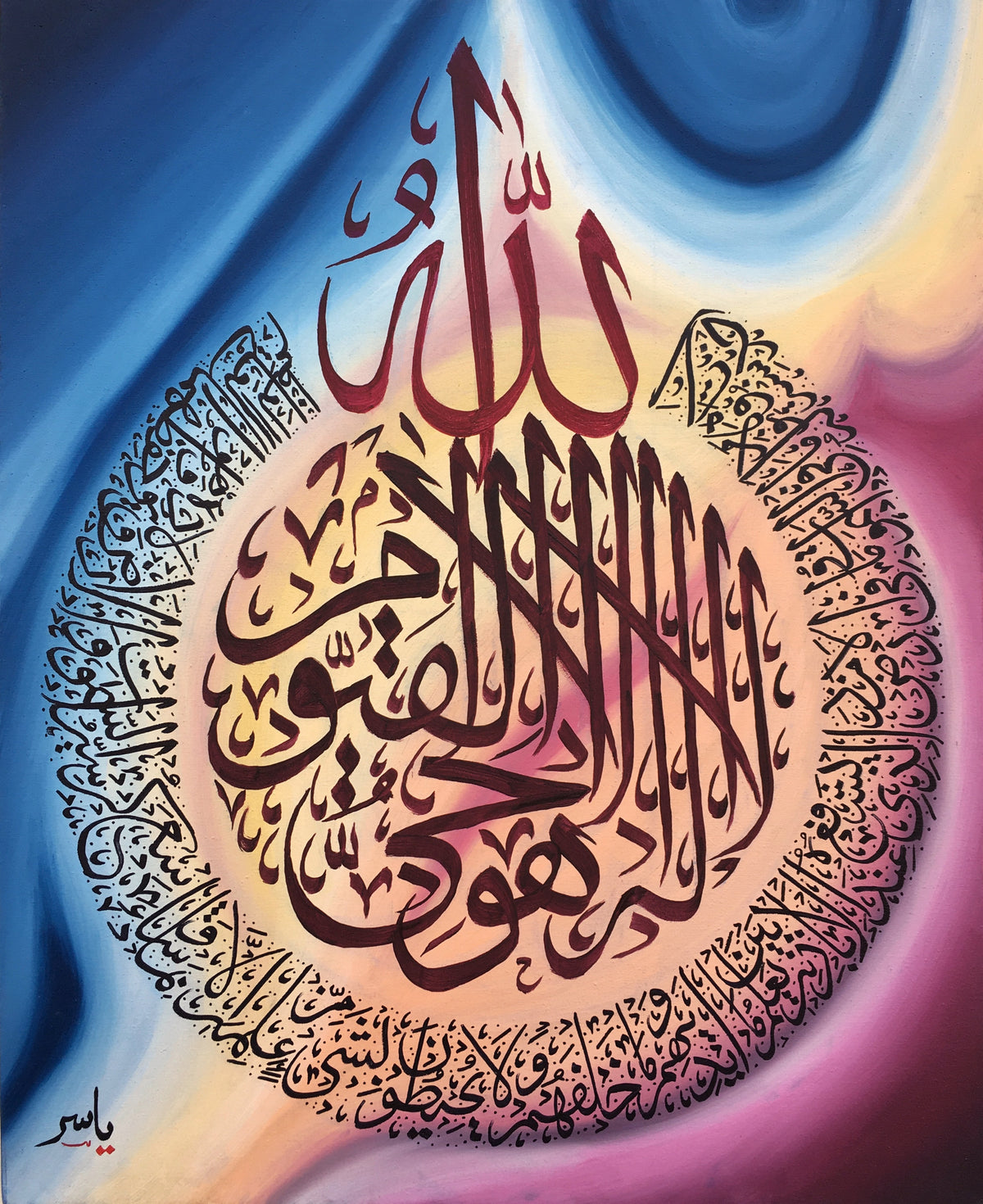
Paintastic Valley offers different artistic interpretations of this inscription. That gives you an opportunity to consider how lettering, background, colour, and texture express a shared subject in distinct ways.
Whether you’re choosing something for yourself or preparing a thoughtful gift, begin with the meaning. Then explore the individual artwork carefully. The right choice should connect with your appreciation of the words while giving you a composition you genuinely want to keep and display.
The Meaning Behind the Surah Ar-Rahman Inscription
The Arabic inscription is:
فَبِأَيِّ آلَاءِ رَبِّكُمَا تُكَذِّبَانِ
A translation is:
So which of the favors of your Lord would you deny?
The verse appears at Surah Ar-Rahman 55:13 and recurs throughout the surah. Reading it within that wider context offers a fuller understanding than treating it as an isolated decorative phrase. القرآن الكريم
A Subject That Encourages Reflection
Gratitude can begin with things that receive little attention: the presence of family, an opportunity to learn, a shared meal, or the support of someone who cares.
The inscription offers a point of reflection for a person who already connects with its message. You may associate it with a meaningful period in your life or choose it because gratitude is something you want to practise more consciously.
An artwork does not replace reading or understanding the Qur’an. Its place in your surroundings can simply offer another occasion to remember and reflect.
Meaning Comes Before the Search Phrase
You may encounter different English spellings of the inscription when browsing online. Transliteration represents Arabic sounds using Latin letters, so product names and searches do not always look identical.
When choosing fabi ayyi ala i rabbikuma tukazziban calligraphy, review the actual Arabic inscription rather than judging accuracy from the English product title alone.
Ask for a clear photograph if the lettering is difficult to examine. If necessary, seek help from someone who can read the script confidently before making your decision.
Choose Art with a Personal Connection
You don’t need an elaborate explanation for why a particular painting feels right. You might connect with the verse, appreciate the artist’s interpretation, or find that both qualities matter equally.
Take a moment to identify that connection. Would you still appreciate the work if your furniture changed? Does its subject mean something to the person receiving it?
These questions help you choose beyond a temporary decorating preference.
Different Artistic Interpretations at Paintastic Valley
A shared inscription does not make every painting the same. The treatment of lettering, the surrounding marks, and the relationship between warm and cool colours can change the experience of the work.
Paintastic Valley’s related listings provide distinct options to examine. Compare the actual images and descriptions before deciding which interpretation appeals to you.
Explore Fabi Ayyi Ala I Rabbikuma Tukazziban Calligraphy in Different Styles
One verified listing presents a modern 3D interpretation with greenish and bluish-green tones. Another describes a 24 × 36-inch acrylic canvas with an abstract palette knife background in bluish and brownish-yellow shades. Both list M Yasir Azeemi as the artist.
These are separate artworks. The size and medium stated for one should not automatically be applied to the other.
Start by comparing the overall compositions. Then examine the lettering and surface details more closely. Your preference may become clearer when you consider the complete work rather than selecting by colour alone.
Read the Relationship Between Lettering and Background
A painting’s background influences how the inscription is experienced. Strong contrast can bring lettering forward, while closely related tones can create a more integrated composition.
Look for the area that attracts your attention first. Does the written form remain the main subject? How does your eye move from one part of the painting to another?
You don’t need specialist art vocabulary to answer these questions. Describe what you notice in your own words. This can make it easier to compare two works that initially appear similar.
Examine Texture Without Assuming the Materials
Photographs can suggest a textured surface, but they cannot communicate every physical detail. Lighting may emphasise certain marks or make a surface appear flatter than it is.
Ask for additional views when texture is important to your decision. A photograph taken from an angle can be useful alongside a straight-on image.
Also check the written specifications. A visible raised effect does not establish a particular material, thickness, or construction method unless the seller confirms it.
Appreciate Arabic Calligraphy Art at Two Distances
View the artwork close enough to consider its lettering, then look at the complete composition from farther away.
At close range, you may appreciate fine details and surface changes. From a distance, larger shapes and contrasts become more important.
This is particularly helpful when buying online. Review both detailed photographs and a full view so your expectations are based on more than a small product thumbnail.
Specifications for the Related Paintastic Valley Paintings
The following comparison summarises the verified differences between two listings. Confirm any missing information before ordering.
|
Specification |
Modern 3D Version |
Abstract Palette Knife Version |
|
Store |
Paintastic Valley |
Paintastic Valley |
|
Artist listed |
M Yasir Azeemi |
M Yasir Azeemi |
|
Subject |
Surah Ar-Rahman inscription |
Same inscription |
|
Listed size |
Confirm with seller |
24 × 36 inches |
|
Listed surface |
Canvas |
Canvas |
|
Medium |
Confirm with seller |
Acrylic |
|
Colour description |
Greenish and bluish-green |
Bluish and brownish-yellow |
|
Technique described |
Textured 3D calligraphy |
Abstract palette knife background |
|
Framing and hardware |
Confirm before purchase |
Confirm before purchase |
|
Availability |
Check current listing |
Check current listing |
These details come from the individual product descriptions. Paintastic Valley
Confirm the Exact Version You Want
Before purchasing fabi ayyi ala i rabbikuma tukazziban calligraphy, save the link or product name of the version you prefer.
This avoids confusion when discussing framing, delivery, or possible custom work. If you send an enquiry, include a screenshot of the selected painting alongside its link.
Ask the seller to clarify anything that is not stated. A specific answer about one artwork is more useful than a general description of the collection.
What to Review Before Ordering
Use this practical checklist:
- Confirm the inscription shown in the product photograph.
- Check the dimensions and orientation.
- Ask whether measurements include a frame.
- Establish how the artwork is supplied.
- Confirm its weight and hanging requirements.
- Review current availability and delivery arrangements.
- Request care instructions for the actual materials.
If originality, a signature, or supporting documentation matters to your purchase, ask about those details separately. Don’t assume they are included.
A Meaningful Choice for Yourself or Someone Special
Fabi ayyi ala i rabbikuma tukazziban calligraphy may appeal to someone who wants the subject of gratitude represented within their personal surroundings.
The reason for choosing it can shape the way you present and appreciate it. Consider the recipient, occasion, and context rather than treating every purchase in the same way.
A Gift for a New Chapter
A new home, marriage, graduation, or family milestone can prompt reflection on the people and opportunities that made it possible.
If the recipient appreciates Qur’anic calligraphy, this inscription may connect thoughtfully with that moment. Choose according to their taste rather than assuming all Islamic artwork will suit them equally.
Ask about their preferred colours or available space when possible. If the gift is a surprise, confirm practical details carefully and avoid guessing about customisation.
Pair the Artwork with a Personal Message
A brief handwritten note can explain why you chose the painting. Focus on the recipient and your relationship with them.
For example, you might express gratitude for their support or celebrate the beginning of their new home. Keep your wording personal and clearly separate from the Qur’anic inscription.
The gift then has two connections: the meaning of the artwork and the reason you selected it for that person.
An Illustrative Gift-Selection Example
Imagine siblings choosing a gift for their parents after a family celebration. They agree on the inscription because gratitude feels relevant to the occasion, but they initially prefer different artistic versions.
They compare photographs, confirm the available wall dimensions, and ask about the presentation of each painting. Instead of selecting by price or colour alone, they consider what their parents would enjoy.
They then include a short note thanking their parents for their care. This is an illustrative example, not a reported Paintastic Valley customer story.
Fabi Ayyi Ala I Rabbikuma Tukazziban Calligraphy at Paintastic Valley
When selecting wall decor calligraphy containing Qur’anic text, choose a respectful position consistent with your household’s practices.
Consider where the work can be appreciated without being crowded by everyday clutter. Follow the seller’s guidance for installation and care.
For religious questions about display, consult a trusted qualified scholar. Product descriptions can explain the artwork but should not be treated as religious rulings.
Choose Your Interpretation at Paintastic Valley
Fabi ayyi ala i rabbikuma tukazziban calligraphy combines a familiar Qur’anic reminder with an artist’s decisions about lettering, colour, and composition. Its appeal can begin with the inscription and deepen through the particular work you choose.
Compare the versions carefully, confirm the specifications, and give yourself time to consider which interpretation feels most personal. There is no need to choose the largest or most visually dramatic piece if another connects with you more closely.
Explore Paintastic Valley’s original artwork collection and review the related product listings. Ask about current availability, presentation, and delivery before ordering. Choose Arabic calligraphy art with a subject you understand and an artistic character you’ll enjoy appreciating over time.
Frequently Asked Questions
What does fabi ayyi ala i rabbikuma tukazziban calligraphy mean?
It features a recurring inscription from Surah Ar-Rahman asking which favours of the Lord would be denied. Its message invites reflection on blessings. Read the verse within the surah for fuller context.
Why do I see different English spellings of the inscription?
English transliterations use Latin letters to represent Arabic sounds. Spellings can vary between listings and searches. Review the actual Arabic text and ask for clarification when comparing products.
Does the painting include the complete Surah Ar-Rahman?
The featured inscription is a verse that recurs within the surah. It does not, by itself, mean the complete surah is included. Confirm the exact text shown in the selected artwork.
Which Paintastic Valley version is 24 × 36 inches?
The abstract palette knife version discussed here lists that size. Do not apply those measurements to other versions automatically. Confirm the selected artwork’s dimensions and framing details before purchasing.
Does 3D calligraphy mean the painting contains separate sculpted letters?
Not necessarily. The term describes an effect or presentation that needs clarification from the seller. Ask about the materials and construction if physical depth is important to your purchase.
Can I commission a different interpretation of this inscription?
Ask Paintastic Valley about current commission options. Agree on the inscription, dimensions, colours, materials, price, preparation time, and approval process before arranging custom work.
Is this artwork an appropriate gift for a family occasion?
It can be thoughtful for someone who appreciates the inscription and calligraphy. Consider the recipient’s taste, understanding of the subject, and available space, then confirm delivery timing for the occasion.
Share